Commercial Loans
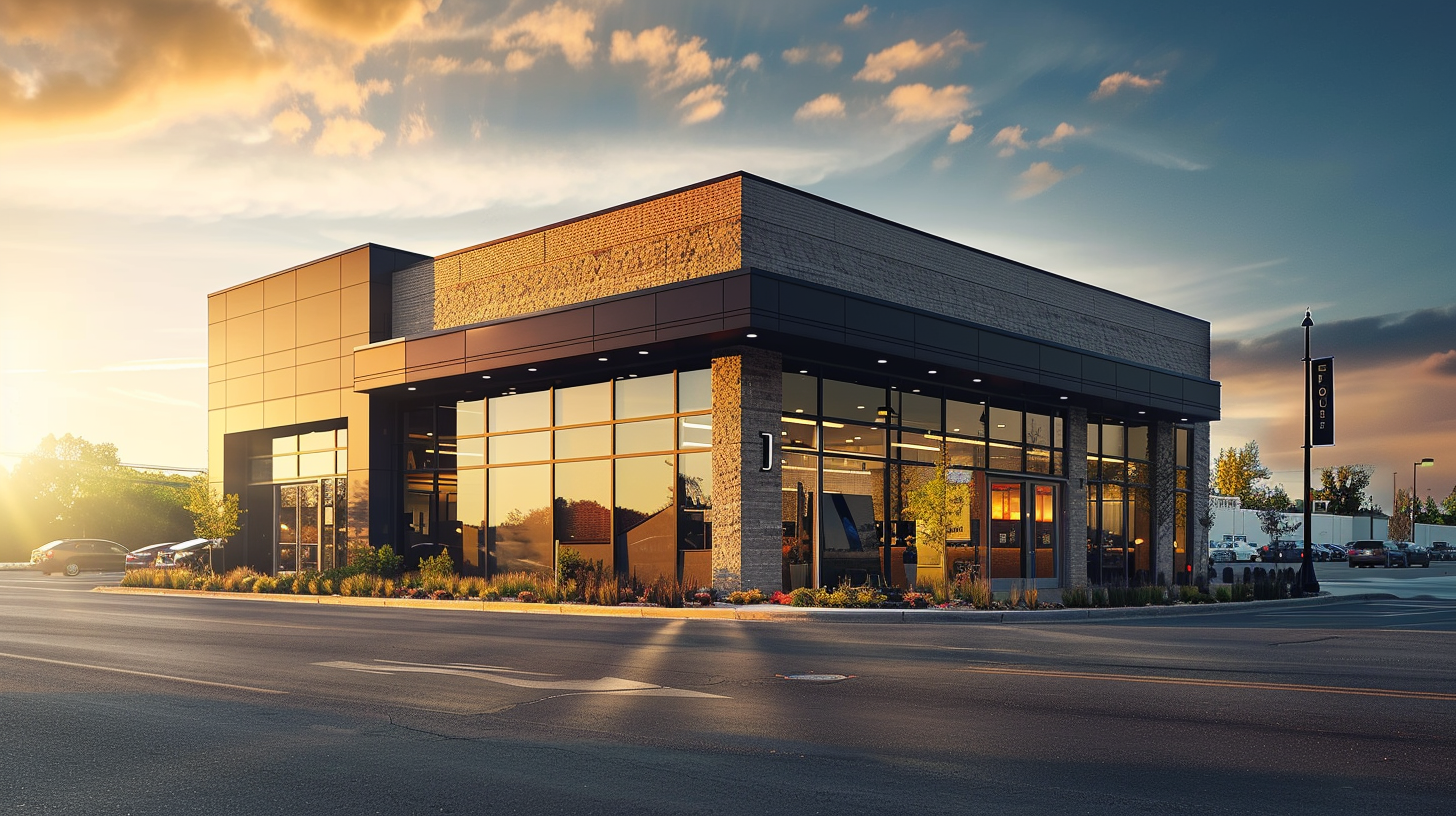
Commercial loans give businesses the capital to purchase property, fund operations, acquire equipment, or manage cash flow. Because these loans are structured around business assets and income rather than personal finances alone, they work differently from the residential mortgages most people know. So whether you're buying an office building, expanding a warehouse, or refinancing existing business debt, the right commercial loan structure depends on what you need the money to do.
Learn how commercial loans work, what lenders look for, and which program types are most common. If you want to talk through your specific situation, a real loan officer is ready when you are.
What Commercial Loans Can Fund
Commercial financing covers a wide range of business needs. The most common application is purchasing or refinancing owner-occupied commercial real estate. However, that's only part of what these programs address. Lenders also structure commercial loans around equipment purchases, inventory needs, business expansion, and working capital gaps.
Since the collateral and repayment source both tie back to the business, lenders evaluate the strength of the business itself — not just the property's value. That distinction shapes every aspect of how these loans are underwritten.
How Commercial Loans Work
Commercial loans don't operate like residential mortgages. While a 30-year fixed mortgage pays off completely over its full term, most commercial loans carry shorter terms — typically 5 to 10 years — with longer amortization schedules. For example, a loan might amortize over 25 years but carry a 7-year term. As a result, a balloon payment comes due at the end of that term, requiring you to pay off the remaining balance or refinance.
Also, rates may float based on the Secured Overnight Financing Rate (SOFR) or be indexed to U.S. Treasury benchmarks. Some programs, such as the CDC/504, offer a fixed rate on the SBA-backed portion. You can use our mortgage calculator to model payment scenarios before you meet with a loan officer.
Loan Structures at a Glance
| Loan Type | Best For | Key Feature |
|---|---|---|
| SBA 7(a) | Working capital, equipment, real estate | Up to $5M; government-guaranteed |
| CDC / 504 | Owner-occupied property and major equipment | Up to $5.5M; fixed rate on CDC portion |
| Commercial Term Loan | Equipment purchases, business expansion | Fixed amount, set repayment schedule |
| Line of Credit | Ongoing cash flow management | Revolving; draw and repay as needed |
| CRE Loan | Purchase, refinance, or construction | Property as primary collateral |
Typical Commercial Loan Parameters
| Parameter | Typical Range |
|---|---|
| Loan Amount | $250,000 to $5M+ (varies by program) |
| Loan Term | 5 to 10 years |
| Amortization Period | 20 to 30 years |
| Interest Rate Type | Fixed or floating (SOFR / Treasury indexed) |
| DSCR Requirement | 1.25x or higher |
| Down Payment | Varies by program; SBA options allow lower contributions |
What Lenders Evaluate
Commercial loan underwriting is more detailed than residential underwriting. Lenders examine the financial health of the business alongside personal credit history. If your DSCR falls below 1.25x, most lenders will decline the loan regardless of other strengths. That's why cash flow documentation carries so much weight in the approval process.
| What Lenders Review | Typical Requirement |
|---|---|
| Personal Credit Score | 680+ (varies by lender and program) |
| Debt Service Coverage Ratio | 1.25x minimum |
| Business Tax Returns | 3+ years |
| Personal Tax Returns | 2 to 3 years |
| Time in Business | 2+ years (SBA programs may vary) |
| Collateral | Property, equipment, or business assets |
For instance, a DSCR of 1.25x means your business generates $1.25 in net operating income for every $1.00 in scheduled debt payments. Also, lenders will typically request profit-and-loss statements, business bank statements, and a current rent roll if the property generates rental income.
Self-Employed or Complex Business Income?
Since business income can look different on paper than it does in practice, many business owners benefit from working with a loan officer who understands the nuances. Our self-employed and complex income borrower page covers how lenders approach documentation when income doesn't follow a standard W-2 pattern.
Common Uses for Commercial Financing
Commercial loans apply across a broad range of property types and business needs. Below are the most common scenarios we see.
Pros and Trade-Offs
- Access to significant capital for property and growth
- Multiple structures to match your specific business purpose
- SBA programs offer lower down payment requirements than conventional commercial financing
- Both fixed and floating rate options are available
- Longer amortization periods reduce monthly cash burden
- CDC/504 loans, backed by the SBA, can finance projects up to $5.5 million
- Balloon payments at term end create refinancing pressure
- Shorter terms mean periodic renegotiation of loan conditions
- Qualification is more complex than residential mortgage underwriting
- Rates are generally higher than residential mortgage rates
- Extensive documentation required across multiple years
- If rates float, your payment exposure increases in rising-rate environments
Get Honest Answers From Someone Who Knows
Commercial lending involves a lot of moving parts. A real conversation beats more reading when you're trying to figure out what program fits your situation.
Ask a Real QuestionA Real Borrower Scenario
Maria has run a physical therapy clinic for 12 years. She's been leasing her office space for most of that time, but her landlord recently put the building up for sale. Because she wanted to stop paying rent and start building equity, she reached out to explore a commercial purchase loan.
Her business generated roughly $310,000 in annual net operating income. With a projected annual debt service of approximately $196,000, her DSCR came in at about 1.58x — comfortably above the 1.25x threshold most lenders require. So she moved forward with a CDC/504 structure, which allowed her to put less down than a conventional commercial loan would have required.
Her projected monthly payment came in competitive with the rent she had been paying. Also, she now owns the building her business occupies, which builds long-term equity in both the real estate and the practice itself.
Get Honest Answers From Someone Who Knows
Because commercial lending involves more variables than a typical mortgage, a short conversation usually clarifies more than any page can. No application required. Just talk to someone who understands how these programs actually work.
Ask a Real QuestionFAQs Commercial Loans
Both programs carry backing from the U.S. Small Business Administration, but they serve different needs. The SBA 7(a) is the more flexible option, covering working capital, equipment, and real estate purchases up to $5 million. The CDC/504 program focuses specifically on fixed assets like owner-occupied commercial property, with project financing up to $5.5 million. Because the CDC/504 loan involves two lenders, a Certified Development Company handles part of the funding, which often results in a fixed rate on that portion.
While both involve real property as collateral, commercial loans operate on different terms. Residential mortgages typically carry 15- or 30-year terms with fully amortizing payments. Commercial loans, however, usually run 5 to 10 years with longer amortization schedules, which means a balloon payment comes due at term end. Lenders also evaluate the business's cash flow and DSCR rather than focusing primarily on personal income. This makes the underwriting process more complex but also opens options for businesses that generate strong operating income.
DSCR stands for Debt Service Coverage Ratio. It measures how much net operating income your business generates relative to its total debt payments. So when lenders see a DSCR of 1.25x, that means the business earns $1.25 for every $1.00 in scheduled debt payments. Most commercial lenders require a minimum of 1.25x as a baseline, though stronger ratios often give borrowers more room to negotiate rate and terms. If your DSCR is below that threshold, a lender may decline or require additional collateral or a larger down payment.
Yes, mixed-use properties are a common use case for commercial financing. If the commercial component makes up the majority of the property's square footage or rental income, lenders will generally treat the transaction as commercial. If the residential portion is dominant, a different loan structure may apply. A loan officer can help you determine how your specific property will be classified before you proceed.
Conventional commercial loans can close in 30 to 60 days, depending on transaction complexity and how quickly documentation is gathered. However, SBA loans typically take longer, often 60 to 90 days or more, because of additional steps in government underwriting. Starting the documentation process early — including 3+ years of tax returns and current financial statements — helps avoid unnecessary delays. Your loan officer will give you a realistic timeline based on the specific program and your situation.
Commerical Loan Disclaimer
This is a hypothetical example for illustrative purposes only and does not represent an actual loan, borrower, or transaction. Financial figures including net operating income, debt service coverage ratio, and monthly payment amounts are assumptions used to demonstrate how a commercial real estate loan may work. Actual loan terms, rates, payments, and eligibility will vary based on individual creditworthiness, property type, lender requirements, and market conditions. All loans are subject to credit approval and underwriting. SBA CDC/504 loans have specific eligibility requirements set by the U.S. Small Business Administration. This is not an offer to lend or a commitment to provide financing. Not financial or legal advice — consult a qualified professional before making any financing decisions.